


 Cart
Cart
 sales@molnova.com



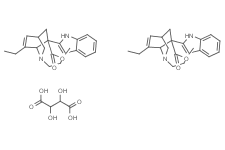
Catharanthine tartrate
CAS No. 4168-17-6
Catharanthine tartrate( —— )
Catalog No. M18532 CAS No. 4168-17-6
Extracted from whole herb of Catharanthus roseus (L.)G.Don;Store the product in sealed, cool and dry condition.
Purity : >98% (HPLC)
 COA
Datasheet
HNMR
HPLC
MSDS
Handing Instructions
COA
Datasheet
HNMR
HPLC
MSDS
Handing Instructions
| Size | Price / USD | Stock | Quantity |
| 50MG | 343 | Get Quote |


|
| 100MG | Get Quote | Get Quote |
|
| 200MG | Get Quote | Get Quote |
|
| 500MG | Get Quote | Get Quote |
|
| 1G | Get Quote | Get Quote |
|
Biological Information
-
Product NameCatharanthine tartrate
-
NoteResearch use only, not for human use.
-
Brief DescriptionExtracted from whole herb of Catharanthus roseus (L.)G.Don;Store the product in sealed, cool and dry condition.
-
DescriptionExtracted from whole herb of Catharanthus roseus (L.)G.Don;Store the product in sealed, cool and dry condition.
-
In Vitro——
-
In VivoAnimal Model:13-week-old male SpragueDawley rats (300-350 g) Dosage:0.5-20 mg/kg Administration:IV; single dose Result:Evoked rapid, transient reductions in BP and HR (lasting ,2 minutes) at low doses (0.5–5 mg/kg), whereas at higher doses (10 and 20 mg/kg), the BP and HR reductions were sustained.
-
Synonyms——
-
PathwayCell Cycle/DNA Damage
-
TargetDHFR
-
RecptorOthers
-
Research Area——
-
Indication——
Chemical Information
-
CAS Number4168-17-6
-
Formula Weight486.51
-
Molecular FormulaC25H30N2O8
-
Purity>98% (HPLC)
-
SolubilityIn Vitro:?DMSO : 100 mg/mL (205.55 mM)
-
SMILES[C@]12(c3c(c4c([nH]3)cccc4)CCN3[C@@H]1C(=C[C@H](C2)C3)CC)C(=O)OC.C(C(C(=O)O)O)(C(=O)O)O
-
Chemical Name——
Shipping & Storage Information
-
Storage(-20℃)
-
ShippingWith Ice Pack
-
Stability≥ 2 years
Reference
1. Lin C, et al. Biomed Chromatogr. 2015 Jan;29(1):97-102.
molnova catalog



related products
-
DS18561882
DS18561882 is an orally available, selective and potent inhibitor of methylenetetrahydrofolate dehydrogenase 2 (MTHFD2) with antitumor activity, inhibits MTHFD1 activity and can be used in the study of breast cancer.
-
Lometrexol
Lometrexol (LY 264618), an antipurine Antifolate, can inhibit the activity of glycinamide ribonucleotide formyltransferase (GARFT) but do not induce detectable levels of DNA strand breaks.
-
Talotrexin ammonium
Talotrexin ammonium is a non-polyglutamic acid antifolate. Talotrexin ammonium inhibits tumor growth by targeting dihydrofolate reductase (DHFR), thereby improving anti-tumor activity in a wide range of cancer models, helping to inhibit tumor growth.
